Vilcabamba to Baños:

For a few days in Vilcabamba a lovely retired couple put me up on their farm. In exchange I picked coffee for a few hours in the mornings, and did a bit of painting in a flat they are renting out. Then I loaded up the trusty steed and headed for the Panamerican. It rained most of the way to Loja and from there most of the way to Cuenca.
IMG_1174
IMG_1179
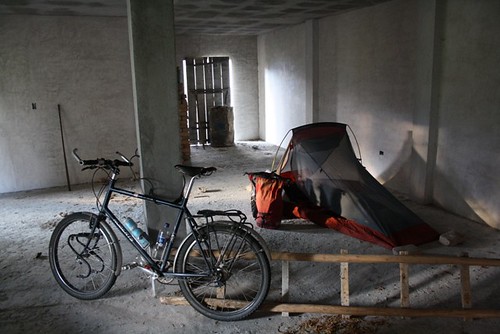
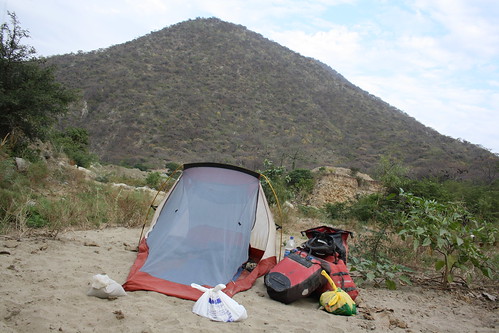
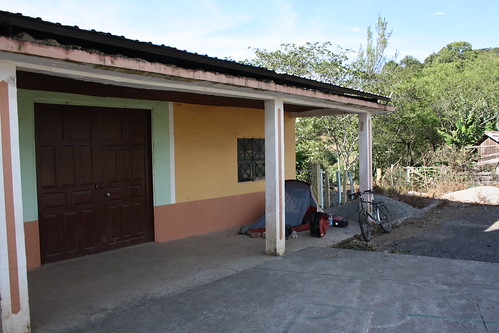
Weird that it is so cold so close to the equator. But then I was still cycling along above 2000m. Camping in an unfinished house that a shop owner said I could use kept me out of a biting cold wind. The next night I found a Wild West themed restaurant out in the middle of nowhere and the owner let me camp outside. There must have been something about the clay hereabouts as I saw many little brick factories as I climbed up, up, up.

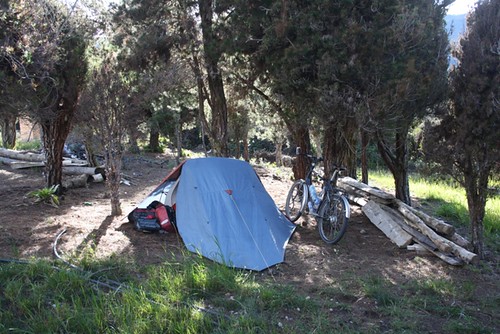
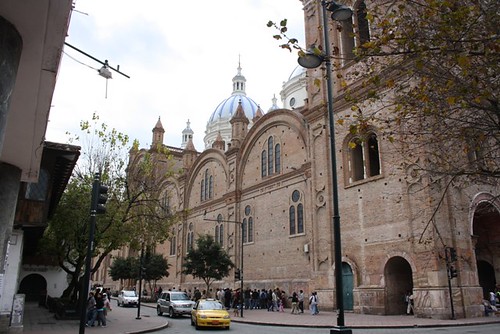
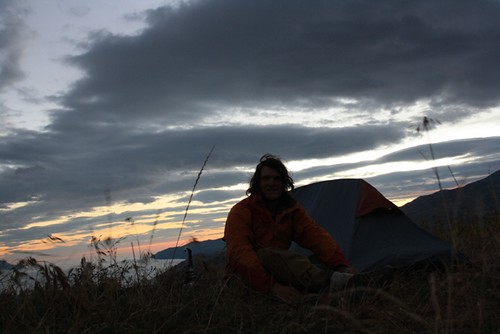
Cuenca is a delightful old colonial city and so it is also quite expensive. I got my fill of architecture and slept in a bit too much comfort. Then I headed on towards Riobamba. Nice campspot in a corn feild with a beautiful sunset. Met a huge gaggle of cyclists heading south. Fully supported. There website is bike-dreams.com. Check out the price 8400 euros for 129 days. Phewy!
IMG_1183
IMG_1202
IMG_1206
Also met Ewan McGreggor. Or at least someone who looked a bit like him...
IMG_1209
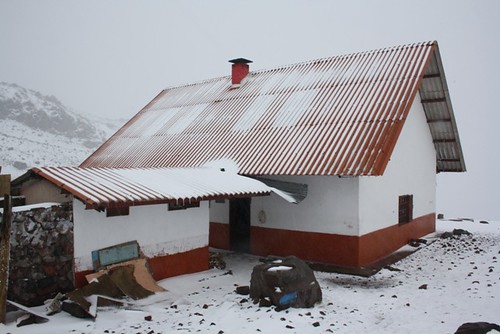
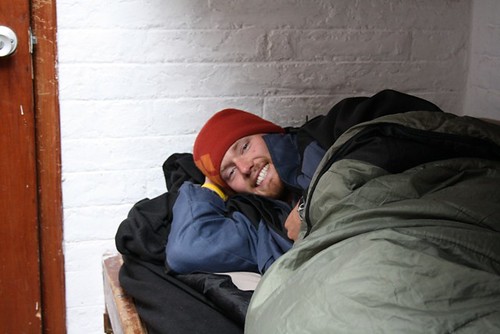
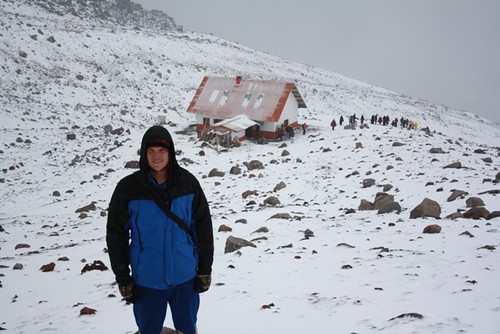
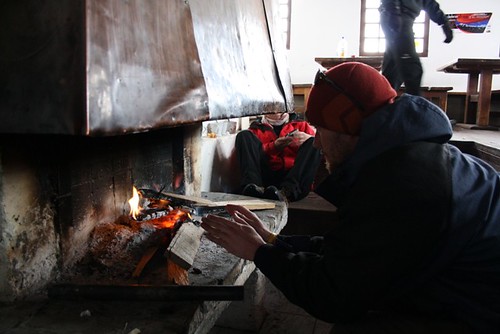
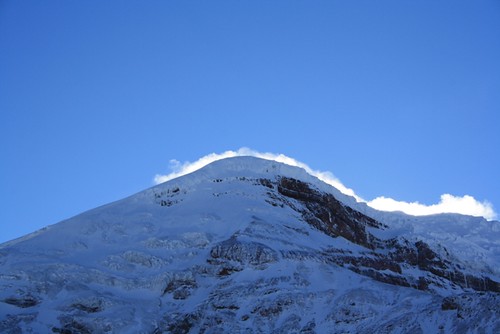
Got to Riobamba and found my couchsurfing host, Wladimir who had also fixed me up with a climbing partner and guide to have a crack at Chimborazo. Dean and I got a bus to the national park and hiked up to the refuge at 5000m where we spent 2 days eating, playing cards, warming ourselves by the fire, eating, drinking tea, eating and waiting for Ediverto, our guide, to show up. Occassionally we went and lay down pretending to sleep. The weather outside shook the refuge and we saw nothing of the mountian we intended to climb. All this time we saw groups arrive and looking at the conditions, turn back. There was much discussion about an accident earlier in the week in which a climber was injured by a rock fall/avalanche. Very few even left the refuge. Also, a slightly creepy Russian bloke, called Igor, started probing us with questions. It was soon clear that he intended to follow us when we set off. Bit cheeky seeing as we'd paid for a guide and he hadn't.
IMG_1212
IMG_1214
IMG_1222
IMG_1226
IMG_1249

Ediverto showed up and at 11pm we set off. The sky was clear now but it was very windy. The fresh snow, warmed up by that blanket of cloud, was described by Ediverto as suave (soft or gentle) and later on loco (crazy). I began to get the impression this wasn't going to happen. As we headed up we saw that Igor was following us. Then, as we stopped to have another good look at the snow, he overtook. At the base of "the corridor", the site of the accident, we couldn't see Igor above. Ediverto said he was very worried about him as it was a very dangerous part to be on your own. He decided that the risk of rockfall in this spot was too high especially with the strong wind. And higher up the chance of avalanche was also strong because of the poor snow conditions. He explained all this to us and we had to accept his decision. As we walked down he was very worried about Igor. Soon we saw his head torch following us down.

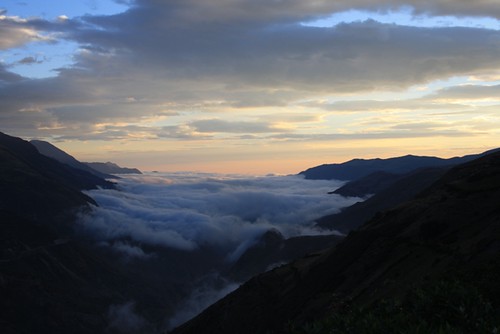
Back in Riobamba I got a full day's sleep and then set off again. Due to my lousy sense of direction, and Ecuador's lack of sign-posts, I ended up going up a very long hill in not quite the right dirrection. I ran out of water and had to top up from a village tap, bit risky. Then got some dry bread to eat for lunch. In the end I managed to work out roughly were I was and the bonus of all that climbing was I got to freewheel for thirty odd kilometres down to Baños.

Next, I head for the jungle town: Puyo...

Ecological Farming on a Ecuadorian Mountainside

"We are stardust. We are golden. And we've got to get ourselves back to the garden."
-Woodstock by Joni Mitchell
IMG_1108
IMG_1051
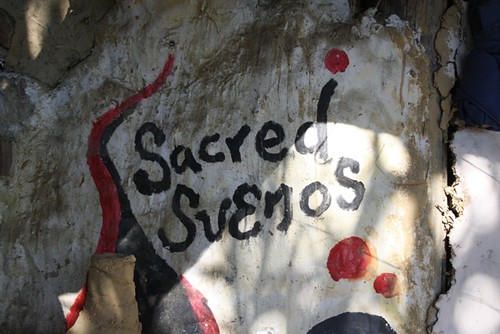
My friends Ryan and Jenn travelled through South America a few years ago and visited an ecological farm called Sacred Sueños. Jenn wrote an article about Permaculture farming in a Canadian magazine. Ryan recommended the place to me so, with my bike safely locked up in a garden shed at the base of the mountain, I hiked the two hours up the mountain to the farm.
IMG_1048
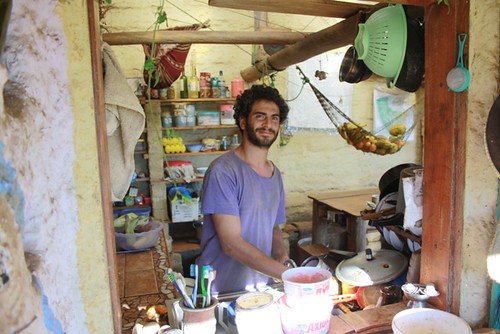
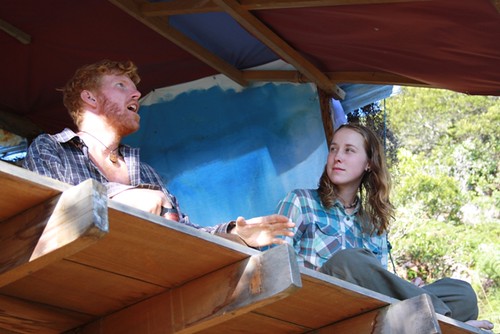
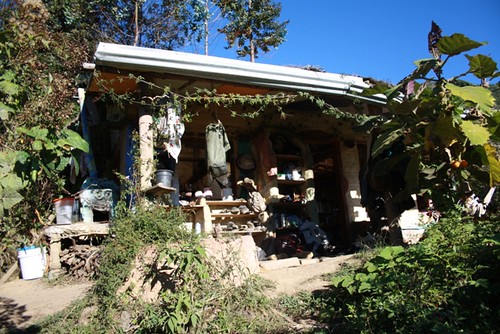
Yves Zehnder bought the land here 7 years ago. He is a ginger haired Canadian driven here by his frustration with modern society. He put up his tent and set about trasforming the 10 hectares of land. The soil was very low quality, years of slash-and-burn farming had left only bracken fern. He built himself an adobe brick house which now acts as the kitchen and communal area for the volunteers like me who come to live and work here for a few weeks.

In his first few years the local Ecuadorians thought this young gringo who had bought land would make an excellent husband for their daughters. They would bring their loveliest seventeen-year-olds which he would politely decline. Rumours spread that he was gay. One day, after a hard day building the kitchen, Yves decided it would be fun to strip naked, jump in the mud pit, used to make the earth bricks, and splash around and make monkey noises. Perhaps too much time alone on a mountainside was to blame. Unbeknownst to him a local farmer was on his way with another angelic young daughter. They got the shock of their lives and Yves pulled on his jeans. His muddy legs stuck to the inside.

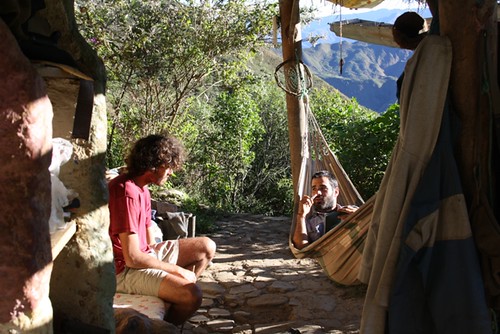
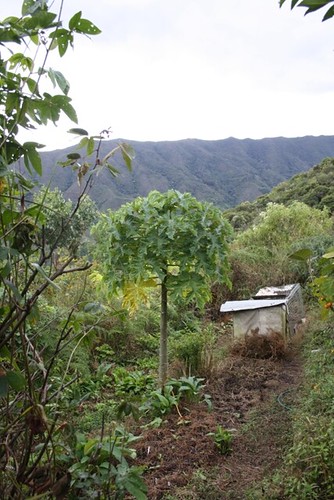
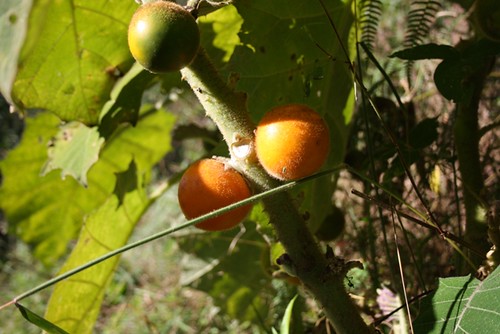
Seven years on and things are in a little more order. Yves and his partner Jenn are live at the farm and a stream of volunteers come up to help out for a few weeks. The farm has been designed along permaculture principles and aims to become self-sufficient and sustainable. All sorts of trees are in the ground such as Hazelnuts, Avocados and Peach, but it will be several years still till they reach maturity. The garden is fairly fruitful especially with salad, beans and grenadilla. I spent 3 weeks digging trenches, building trails and steps, building new raised beds and helping to build a new water tank. Here is a summary of the kind of thing they are doing.
IMG_1140
Improving soil
Chicken Tractor (Chickens are kept in a movable coop. Their droppings help to improve soil fertility)
Humanure (The result of the composting toilet. One of the best fertilizers on the farm)
Compost (Layers of dry grass, donkey shit, kitchen scrap, ash, fresh green matter and more donkey shit. Turned infrequently in the hope that nutrients don't escape to the air)
Compost tea (Fish beans and comfrey mixed in water or urine. Water soluble nutrients are more likely to form in a liquid, bit smelly though)
Planting native species
Planting dynamic accumulators such as nitrogen fixers.
Heavy prunning
Protecting with mulch, contour ditches, bunds and tree roots (to stop all that good soil being washed down the mountian).
IMG_1134
Building
Cob - A building technique using clay, sand and earth bonded together with straw fibres tradditionaly but recycled plastic strips can be used. The dormitory where I stayed had a "Bodega" built from cob with a wooden structure above.
Adobe bricks - Tradditional building material in South America. Bricks are made from clay, sand, earth and water and dried in the sun. The communal kitchen is built from adobe.
Earthbags - Another technique using earth, this time in polypropelene bags (3 cents each) which are filled and rammed in place. Sucessive layers are tied with string and help in place with barbed wire. The water tanks are built in this way.
Natural timbers and rocks.
Cement, Tin roofs, transparent plastic sheeting and lumber from down the hill
IMG_1075IMG_1077IMG_1113
Animals
Donkeys and horse (used for logistics, i.e. for carrying food/gas/people/building materials up the hill and thier shit is collected to go in the compost)
Goats (Yves runs a small goat cheese business so he can afford to pay the weekly $25 for food)
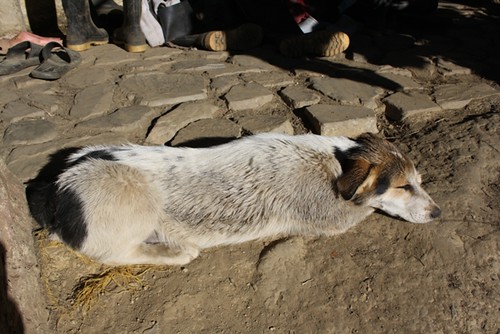
Dogs (companionship and security)
Cats (companionship and pest control)
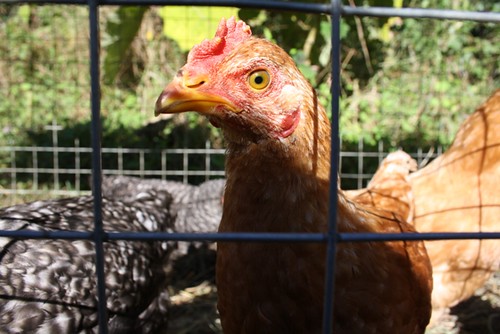
Chickens (eggs and soil fertility)
Bees (polonation, in the future hopefully honey, wax and propolis)
IMG_1063IMG_1085IMG_1106IMG_1116
Human Services
Toilet (Composting toilet for poo. Essentially just a glorified bucket. Sited with great views of the mountian. A scoop of sawdust (which they get for free) goes over the shit. The bucket is emptied into a pile where it decomposes into a firtile soil called Humanure. Wee on trees, or collected for compost tea).
Shower (A lovely outside heated shower with a coil of black pipe that heats up in the sun)
Laundry (bucket and washboard. There is also another spiral of black pipe to heat up the washing water.)
Cooking (gas bottles from down the hill)
Food (some fruit and veg from the garden plus $25 a week each for food from the market in Vilcabamaba)
Light (candles and headlamps)
Computer (solar charged)
Batteries (charged down the hill)
Cell phone (solar charged)
IMG_1052IMG_1054
Stimulus
Music (mp3 players and a solar powered amp and speakers)
Musical instruments
Books (well stocked library)
Animals
Radio
Games box
Firepit
Conversation and stories

Recycling
Food scraps and peels is used for compost or animal feed.
Paper is burned.
Plastic is reused where possible. Milk and oil containers are turned into planters. Other plastic bags are either reused or cut into strips to be used in cob building.
Only the most scanky of stuff, and non-rechargable batteries, go down the hill.
IMG_1037IMG_1036IMG_1035
Water
Water tanks
Dammed creeks
Drainage ditches and contour bunds
Ponds
Gutters to collect rain off roofs which is then diverted to plants.
Mulch
Micro catchment (when a new tree is planted, ditches are dug to provide proper drainage)
Greywater system (waste water from washing up, showering, laundry etc is used for irrigation)
Dry toilet (so no water lost in flushing)
IMG_1155
IMG_1153IMG_1147IMG_1143
Sucessful Plants
Naranjilla (for juice)
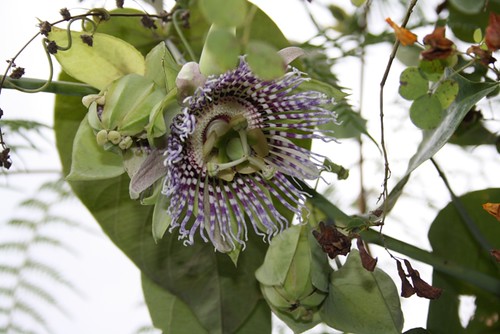
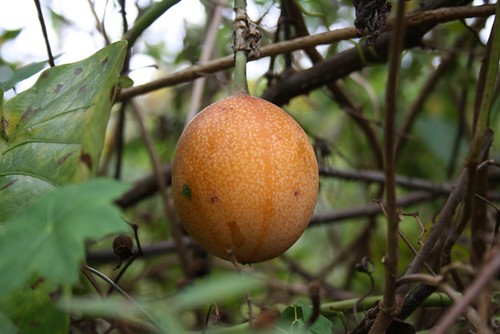
Granadilla
Tomate de arbol (for juice)
Scarlet runner beans (causes lots of farting)
Lettuce and salads
Herbs (oragano, thyme, basil, rosemary, lemon verbatim, mint)
Aloe
Raspberries
Blackberries
White carrots
Tomatoes in greenhouse and outdoors
Uvillas
Capeberry
Kale
Zuccini
Tarro root
Laconi
Zambo (a type of squash)

Gardening Methods
Grow from seed
Biodiversity to combat pests and disease
Hand watering
Free labour from volunteers
Pollycropping
Plant with moon

Future Ambitions
Self-sufficiency
A small permanent community
Reforestation
Edible forest garden (trees are all too small still)
Juice bar (for sale to passing horse riders and hikers)
Herbal medicine for use and sale
Preserves for use and sale
Honey and bees wax
Social Projects (Yves set aside the most firtile part of the the land he owns for a future project. He invisages that a women's refuge, a rehab clinic or something like that might be built and run by future residents.)
Internships (They hope to get people willing to stay for several months (rather than a few weeks) so they can take on more responsibility)
Free festivals (primarily just to get more shit for humanure)
Free permaculture design courses for Ecuadorians subsidised by pricey courses for westerners.
IMG_1154
Challenges and Setbacks
Doing everything manually (screws up your back and takes longer but is free (especially with help of volunteers))
Poor soil
Unpredictable climate
Runoff
Mosquitos
Cultural separation (Jenn is having a hard time learning Spanish even after living here for 2 years as the volunteers mostly speak English)
Isolation
Social dynamics (During my stay there were a few moments of friction between Jenn and other volunteers. I think she would freely admit that at times she is not the easiest person to get along with. At one stage, when I was amidst a frustrating plumming dilema (I put the faucet on backwards) this included me, but when she made us both a vodka and freshly squeezed orange juice our differences where set aside.)
Transitory nature of community (It is hard for Jenn and Yves to invest much effort into getting to know people who will be gone in a few weeks.)
Exposure to wind, rain, sun.
Limited personal funds (Jen has a dwindling savings account and Yves is, more or less, broke).
Distance from medical assistance
Mistakes
No refrigeration
Animals (unpredictable)
IMG_1159
Best things about living here
Healthy diet
Plenty of exersize
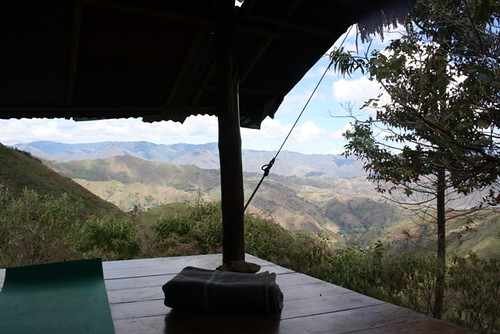
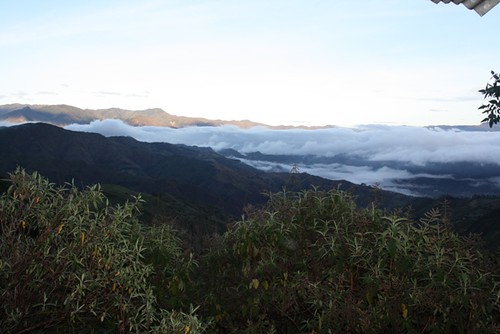
Beautiful setting
Meeting lots of interesting people
Closer connection to food/land/environment
Not wasteful
Learning/experimenting
Sunsets
Donations from people inspired by the project. Land, books, seeds, tools, clothes, animals.
Tranquility
No city bullshit, usually
Waterfall
No boss or 9 to 5. (7 to 7 instead!)
Stars
Animals
IMG_1072

Gringo Biker

I am probably working away on a farm at the moment but I have written a few posts to keep regular readers amused...Next up, Gringo Biker.

IMG_0848
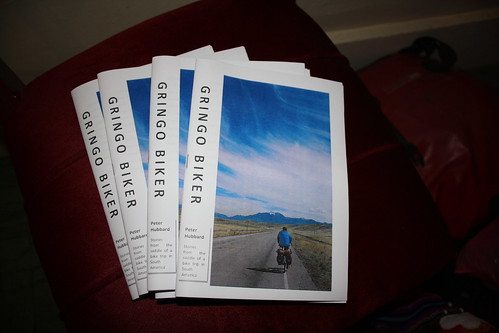
Well, the name is a bit naff, but I wanted something that instantly explained what I was doing. Basically, my inspiration came from Heinz Stucke. This well-travelled cyclist has been on the road since 1962. He now travels from the licencing revenue of over 100,000 travel photos and from sales of his booklet discribing his travels.

Well, I decided to follow suit and bash out a little booklet of travel stories. I filchered most of them from previous posts on this blog. Then I copied them to word, ran a spell check, used Booklet Creator and made a front cover with one of Mike's photos of me. Then I printed off one master copy for 5 soles and had 30 copies photocopied for 30 soles. I sold each copy for 5 soles and had made back my investment in the first day by wandering around Miraflores in Lima and irritating anyone who looked like they might speak (and read) English.
IMG_0696
It is my first dabble with entrepreneurialism and was fun. Especially seeing those 30 fresh copies roll hot of the press.

I am looking forward to making another one with a different set of stories and now I have learned a few important things about manufacturing.

-Photocopying is cheaper than printing.
-Print the master copy to highest standard possible.
-Spell check and read through for mistakes.
-Make sure the pages are in the right order.

And here are my sales tips...
-Grab a few copies in a plastic bag and look for white people.
-Someone on a bike is a safe bet.
-Always approach good-looking girls.
-People with rucksacks.
-People lingering at road crossings, cafe tables, queues and bus stations.
-Mention it over breakfast in a hostel.

A Chat With A Guide Called Eric

I am probably working away on a farm at the moment but I have written a few posts to keep regular readers amused...Firstly, back to the Huayhuash trek in Peru.

Halfway around the trek there are some hot springs where you can soak your aching legs. Dave and I got chatting to a trekking guide with one of the tour groups. He was sat in the hot bath drinking beer and smoking cigarettes. We had already been in and out, and eaten dinner, and sat, in all our warm clothes, on the edge.

To start with we had asked him about his job, whether he was interested in moutain climbing or prefered trekking. He told us that he was keen on climbing but has a knee injury and finds trekking easier.

The knee injury was from carrying a teacher downhill. She was accompanying a group of British children that he was guiding and started to show symptoms of oedema (a potentially life-threatening form of altitude sickness). He ran downhill for 4kms with her on his back. There was no phone reception of course but the group had a British Army emergency transponder with them. A message got through to London and from there to Huaraz. Anyway she survived and Eric got a sore knee.

I asked Eric about the standard of mountain rescue in general and he was, to say the least, disparaging. Helicopters are theoretically available but they have to come from Lima. They won't even take off before insurance details have been sorted out.

Eric didn't have much faith in Peru's government. The country has a wealth of mineral resources and is one of the world leaders in the production of stuff like arsenic, copper, lead, silver, tin and zinc. However, from Eric's point of view, there is no sign of this wealth benefiting the people. He thinks this is due to corruption in government. He sited the example of Alberto Fujimori, the president during the nineties. Fujimori was a university lecturer before being elected, with a modest income. He privatised many state-owned enterprises raising an estimated US$9 billion barely a fraction of which would ever benifit Peruvian people. Last year he was convicted of human rights abuses and corruption and has been sent to prison.

So perhaps it is unsuprising that Eric considers politicians with a great deal of suspicion. The poverty gap is as bad as ever. Some people in the poorer areas of Cusco and Lima live on 2 or 3 soles a day. About 50 pence. Around 35% of the population live below the poverty line.

Peru has a thriving tourist industry. But, yet again, most of the money dissappears. In Cusco, most of the bars, restuarants and hotels in the centre are foreign owned. There are many government schemes to encourage foreign investment. Perurail, which runs the trains to Machu Picchu, which is visited by over 850 million people each year, is owned by a British company. Eric said that Inca trail guides and cooks are fairly well-paid but porters can expect 120 soles for 4 days. About 7 pounds a day. The entrance fee at MP goes directly to Lima as do the entrance fees to the various National Parks in the country. Getting money back from Lima to invest in the tourism industry is like getting blood out of a stone.

The Cordillera Huayhuash itself used to be a national park but the status was revoked. The area was used as a hideout by Shining Path untill that group was defeated in the early nineties. In 2002 two hikers were murdered in a robbery. Then, in 2004, another 4 hikers were shot whilst resisting an armed robbery, one died from blood-loss before rescue. The local police and government felt there was little they could do to police the area any better so instead they instigated a "protection money" system. As you pass by small communities on the trek you must pay between 10 and 35 soles, for which you get a receipt, in total you pay around 150 soles. The money goes toward "upkeep of the trail and to support local communities". This has made the area generally safe but infuriated the Israeli hikers we met.

This year the tourism industry was dealt an additional blow with the flooding in Cusco. At the hight of the floods this year Peru was loosing US$1 million a day due to cancelations. The train to MP was suspended and helicopters were sent to rescue about 2000 stranded tourists and locals. The repair bill has been estimated to be around US$300 million.

We finished our beers and went to bed. It was cold. We pitied those still enjoying the hot water because at some point they had to get out.

Piura to Vilcabamba: Into Ecuador

It was hot as I pedaled out of Piura and on towards the border. I made it to a little town called Las Lomas. In the morning I crossed the border into Ecuador.
IMG_1006
And almost at once the hills began. The first night I camped next to a river and was attacked by insects the minute I unzipped the tent to make tea. Pegs don't work very well in sand so I had to use plastic bags filled with sand. Then I had a day of uphill, I ran out of water and very thirsty I came across a gas station and chanced it and drank litres of water out of the tap (so far it hasn't made me ill).
IMG_1021
That night I reached a small village and asked if there was anywhere I could camp. I was pointed towards the church and camped on the concrete veranda.
IMG_1024
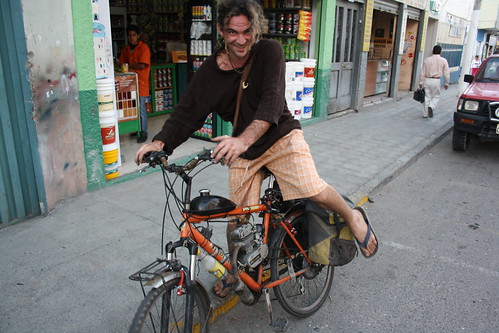
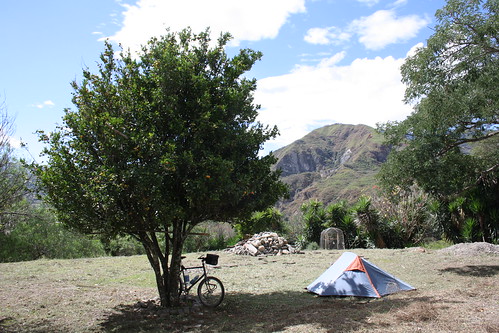
The next day, fuelled by boiled eggs, I reached Loja. On my way into town I bumped into a French bloke on a motorised bicycle. A strange choice of transport I would say. Anyway he showed me a cheap hotel and we got some beers and drank them in a plaza. In the morning I headed down to Vilcabamba. It is hot here so quite refreshing when there is a rain shower. Found a campsite for $1 a night with a pool and camped under a lime tree.
IMG_1027

Dave Patton: Couchsurfer, CAACer, Roadtripper and Backpacker extraordinaire!


After a few months on the road I discovered that a fellow CAACer was in hot pursuit. Dave, using buses, caught me up and he signed me up for a 9 day hike. He is a pretty nifty photographer and it is definately worth checking out his photos here.

1. We recently hiked the Huayhuash trek together. Where did you first hear about this trek?
At one of the weekly Wednesday night Edinburgh couchsurfing group pub meets, a Scottish CSer who´d visited S America highly recommended the hike, saying it was far superior to the Santa Cruz hike. She wasn´t wrong, in my opinion!

2. Which was your favourite day of the trek?
Day 3 - many stunning lakes and mountain vistas; difficult but very rewarding mountain pass with lots of surprises. At camp (Huayhuash village)... politely asking the locals who lived in a couple of mud brick houses for dinner to break the daily routine of spaghetti and pasta sauce. Result... wonderful cultural experience and insight into mountain life, and delicious homemade dinner and breakfast direct from the farm.

3. Why wash?
Huayhuash? Top hike in the world. Why wash? Bar some hot springs, it´s the longest I´ve gone without washing and shaving! The post hike shower has never felt so good.

4. You make good use of Couchsurfing on your trips. What have been your best
experiences?
I´ve had many great CSing experiences, such as Hawaian surfing and many road trips with the locals to places well off the tourist trail. But my favorite was probably my first, near Perth in Western Australia. My host lent me his bike and snorkel to visit Rottnest Island. He took me to one of his Aussie Rules football sessions so I could "give it a go". He welcomed me on a typical Aussie camping weekend with his pals in Margaret River, experiencing swags, fine wines and chocolate tasting. Plus a bedroom to myself in his family home and home cooking were delightful after months of hostels!

5. How many countries have you visited now? Which are your top 5?
46 I think, hope to make it to 100 one day! Top 5, tough question; I like to think of the top 5 places I´d most like to return to.

New Zealand - for people who love the great outdoors.
Thailand - beaches and tasty food at low prices.
Bolivia - adventure travel in a nutshell and very cheap.
South Africa - many natural delights and wild safari.
Italy - it almost has it all; great history, cities, coast, mountains, lakes and food.

(Check out how you are doing against the official list of countries here. I only manage a measly 28.)

6. Can you recommend a book?
Nelson Mandela´s autobiography, to learn what the great man has to say.

7. What is the most inspiring travel tale you have heard?
I have probably been most inspired by an Australian fellow who hitch-hiked almost the length of Africa with another guy and girl. That was real adventure and getting off the beaten track, things that I strive for.

Trujillo to Piura: Rastas, Gorditos, and a Thirsty Supposedly Hydrogen Powered Calamity

IMG_0930
IMG_0956
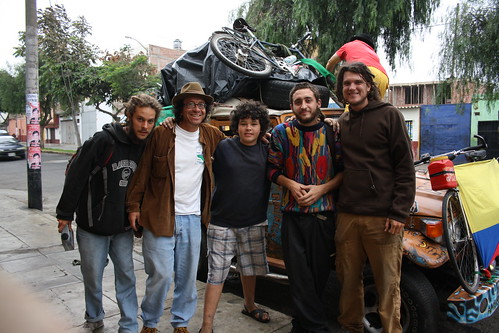
One of the cool things about staying in the Casa de Ciclistas in Trujillo is getting to meet other cyclists. I was lucky enough with the selection on offer. A pair of dreadlocked Argentinians and a trio of Columbians. Good practise for my Spanish. We cooked several meals together including several spicey rice dishes from the Columbians and a tradditional Arroz con Leche from the Rastas. Although, I still think rice pudding is a superior dish.
IMG_0957
One evening we all set off the University. I hadn't really understood why we were going but it turned out that David, one of the Columbians, was going to give a talk to some uni students about Hydrogen.
IMG_0963
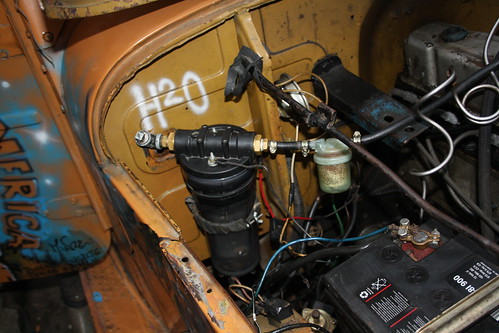
Unusual choice of subject, I thought. Then, out of his bag, he produced a thing. The thing turned out to be for making hydrogen gas by electrolysis of water. Three hours of explanation in Spanish followed. The hard wooden stool I was sitting on didn't help.
IMG_0965
A few days later, in a conversation about a dangerous section of the road ahead, I discovered that David had a car. Funny sort of cyclist to have a car. But he was acting as a support driver for a large expedition of cyclists. Over 30 Columbians who were spread out over the route, a circumnavigation of the continent. He offered to give the Argentinians and me a lift past the dangerous bit. Sure, why not?
IMG_0966
IMG_0973
That night I came back from looking around the town and saw it.

"What's that?"
"It's a car!"

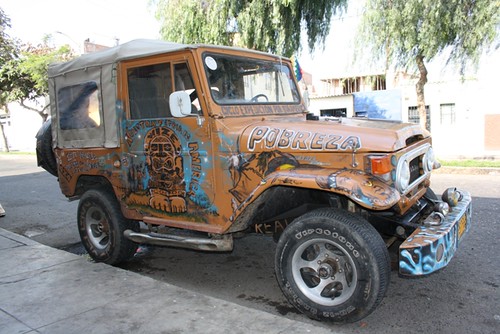
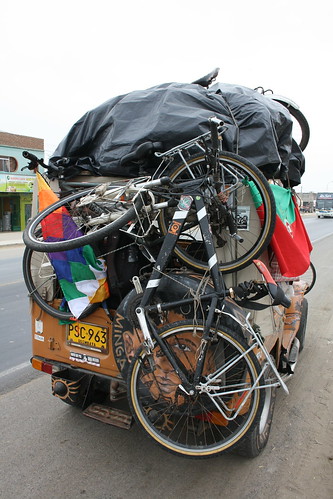
I could see it was a car, but I thought to myself, that is a calamity.

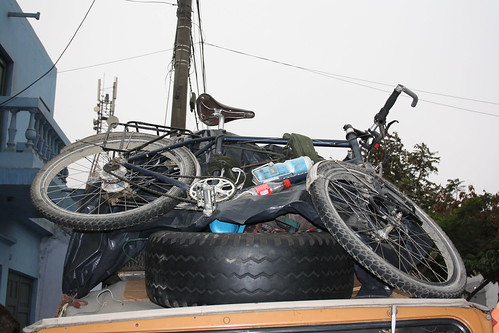
It was also a fairly small calamity considering it was going to carry six people, 4 bikes and a small mountian of gear. And the Columbians had a lot of gear. In pre-dawn darkness we began the task of lashing all the kit on. I went back to check if I had left anything and noticed a small orange glow above me. Sebastian was sat on the top step smoking a joint.
"Desayuno," he whispered.
IMG_0976
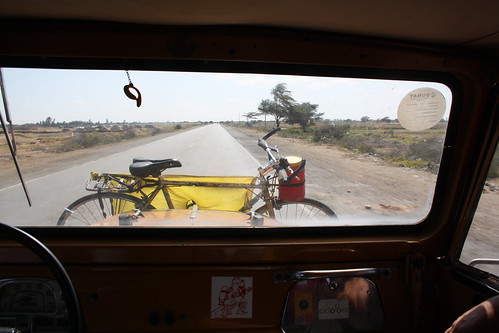
My bike was the last thing to be loaded on. A good choice as it wasn't crushed under a pile of other junk. A bad choice because all the ropes had been used up and I had to tie it on with a wet t-shirt. We finally all piled in. Easier said than done as the back door had been blocked up with lashed on bikes. We climbed through the windows negotiating the roll-bars with limbo-dancer agility. The back of the jeep was taken up by boxes of the Columbian's junk. The four of us were squashed together. As we lurched off it was obvious that Calamity was dangerously top-heavy. Everytime we hit a speed bump the four of us in the back were thrown around. There were no seats and not really enough room. Especially with Christian, Carlos' son. He is affectionately known as Gordito (the little fat one) and calls his dad Gordo. This is a very strange young man. Carlos is a stocky build but not really fat, at least not like his son. At twelve years old he has thighs that are bigger than mine. And it isn't down to cycling.

Calamity supposedly ran on hydrogen but in reality it ran on plain old petrol. Lots of it. David and Carlos had almost no money. So, at each petrol station we would all pile out and David would issue us with stacks of Columbian CD's and posters which we would try and sell to unsuspecting passers-by until we had made enough for the next tank-full. When we headed across the desert we filled up a large petrol canister which had to be squeezed in through the window, under the roll-bars, and gave us even less room. And it leaked.

As we pressed on, wind rattling through the hunk-of-junk, Gordito sang loudly and tunelessly. Or, if he felt so inclined, he would imitate the noise of the engine. This could keep him entertained for hours. If we were unlucky enough to be overtaken by a police car then he would be singing "nee-nah" for the next 15 minutes. Sebastian had had enough and told him to sing out of the window. I began to suspect that there might be something amiss with Gordito. Perhaps some sort of hyperactive problem.

Anyway, at this juncture, Andres took out his homemade pipe. I had seen him carve it out of the pip from a giant avocado a few days before. And started trying to light it in the windy squishy chaos. He wasn't having much success and threw each used match on the floor. Right next to the gasoline canister.
IMG_0969
I have never been more pleased to leave a vehicle in my life and seriously hope it will be a long time before I get in another car. But I guess better than being robbed by bandits.

In Pirua we had a free bed in a fairly wierd place. A recreation facility for miners. There was a meeting going on to try to stop a new mine being built by a big company. But too much Spanish for me so I went and sat by the pool in the dark and listened to the radio. There was a free dinner too which was good. The Argentinians ate their fill and then went off to find a park somewhere to smoke. I went to bed. More exhausting than a day cycling.

This post relates to my bike trip in South America in 2010.
I now offer guided walks and walking holidays in the UK in Northumberland, the Pennines, the Lake District, Scotland and further afield.

I'm always keen for outdoor adventures to help people learn the skills to explore! My particular focus is mountain skills such as navigating with a map and compass and wild camping for expeditions.

A few peruvian recipes...

My favourite Peruvian dish is without a doubt Lomo Saltado. This hits the spot every time. It is kind of a beef stew with chips in it served with rice.

Ingredients:
Beef cut into strips
Oninon sliced into strips
Tomatoes cut into eighths.
Potatoes cut into chips and fried in hot oil
Yellow chili pepper sliced into thin strips
Chopped parsley
Balsamic vinegar
Soy sauce
Oil
Lemon juice
Salt
Pepper

Method:
1. Fry the strips of beef.
2. Add the onion and tomatoes for 2 minutes.
3. Add the rest of the ingredients.
4. Serve with rice.

Another classic from Peru is Ceviche. This is a delicious lunchtime snack made from raw fish marinated in lemon juice.

Ingredients:
Sea bass cut into chunks
Lemons (lots)
Onions
Chili
Garlic
Pepper
Salt
Coriander
Lettuce
Sweet potoato
Corn on the cob

Method:
1. Put fish in a bowl with crushed garlic and salt. Add lemon juice, finely sliced chili, pepper and chopped coriander. Leave for 10 minutes.
2. Slice oninons over the fish.
3. Serve with cooked corn, sweet potato and lettuce.

Many meals in Peru are served with a simple onion salad. Just sliced up with a herb (parsley or coriander) or some lettuce and then drenched in lime juice. I quite like it.

Also, a good snack often found sold on the street is Papa Rellena. This is mashed potato with some mince mixture, and olive and a bit of egg inside. Then fried.

Another street snack is Anticuchos. These are kebabs of beef hearts. When you ask for one you get a roast potato on the end of the skewer.