Showing posts with label RHYTHM CYCLE. Show all posts

Shivering In El Cocuy

IMG_2141
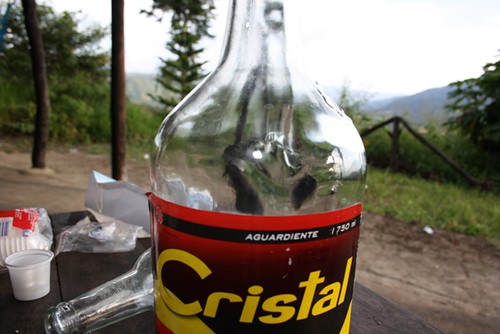
Getting to the Sierra Nevada del Cocuy isn't an easy thing to acomplish by bike. I had anticipated it taking me a day or two from Bucaramanga...But then I did get a little waylayed by some paragliders, a surprise birthday party, some basketball fans, a man in a wig, a maricahi band and something that I recommend you never drink called "aguardiente".
IMG_1928
Then came the toughest stretch of road I've cycled sinse the Careterra Austral. Stupidly steep, narrow, ugly gravel and crossed by gushing rivers on every bend. I arrived at the little village of Guican almost a week and a half after leaving Bucaramanga. A small pueblo perched on the side of a mountain valley with a steep sloped central square.
IMG_2010
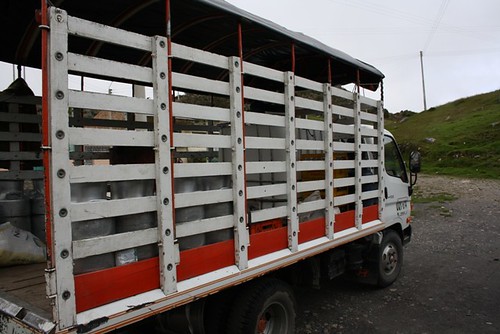
At five-thirty in the morning, at the corner of this square, I found myself waiting along with 5 or six locals, for the lechero. This is an open-sided truck that drives a loop of the mountain roads, collecting small pails of milk from tiny farms and moving about various things like sacks of potatoes, kids going to school, boxes of tools, cowboy farmers (in thick woolen ponchos, ganster hats and welly boots) and a weirdly dressed gringo who wants to go hike in the mountains.
IMG_2095
Well, after a very cold ride (for those poncholess idiots), getting stuck in the mud and stopping every five minutes to pick up milk the journey to Cabañas Kanwari took five hours. I could have walked in three, but I guess it was a novel experience. By the time I reached the cabañas it had began to rain. I scutled into a hut and downed a few tintos (coffee) and ordered a slap-up lunch. This would be the last decent meal before the hiking rations of pasta, rice and oats. It was still raining after lunch but I began the walk.
IMG_2119
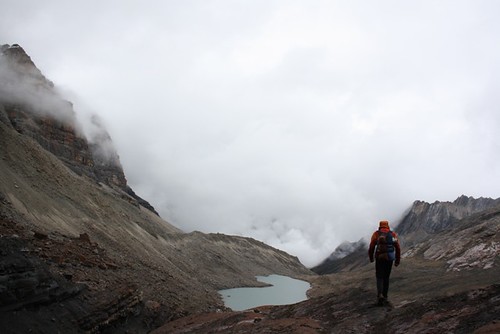
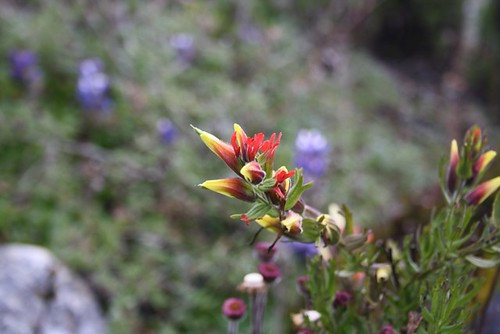
Once I'd hiked to the end of the road, I continued along a track up to a pass and down into a valley. By this stage I was in the mist and couldn't see much at all. The valley was waterlogged and vegetated by the strange, triffid-esque cojine plants unique to this mountain range. Just as it was getting dark, with the rain still lashing down, I found the first lake and put my tent. I was in for a cold night. My sleeping bag has now lost a lot of its feathers. With a wet me inside it, it doesn't provide much warmth. Also, I wasn't well aclimatised and insomnia is one of the first symtoms of altitude sickness for me. But the cold was the worst thing. Every few hours I warmed up the tent by boiling up some water. Unfortunately I couldn't make tea as I forgot the tea bags so I just had bowl after bowl of hot sugary water.
IMG_2077
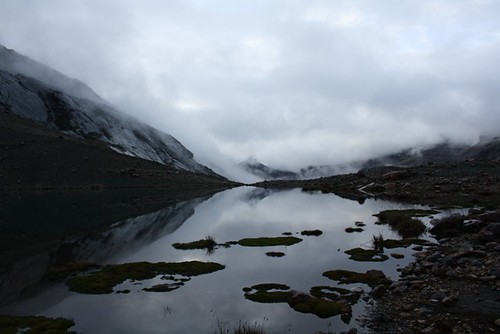
I was packed and walking as sunrise broke. I didn't see it as it was still misty. The terrain switched from bog to rocky trails. I climbed another two 4000m passes with towering cliffs disappearing into the clouds with Laguna del Isla in between. At mid-day I reached Laguna Avellanal and stopped to cook some pasta for lunch. Just as the water came to the boil a hail shower started pelting me. There was no shelter but I decided to wang the tent up by the lake double quick. Then I moved my bag indoors and clamboured over the boulders with the furiously bubbling hot stove in my gloves. Inside it was quite plesant as the hail bounced off the flysheet. I settled in to eat dinner and read "Flashman".
IMG_2057
With the rain still hammering away, and being tired after a sleepless night and seven hours hiking, I decided to stay put and spend the night here. However, as it got dark outside, I realised that water was starting to seep up through the groundsheet. I had put my tent in a depression that was filling up like a pond. Within a few minutes everything in the tent was soaked. I did my best to move about and find a dry spot but it was hopeless. Moving elsewhere was out of the question. It was pitch black outside with a craggy path to follow in mist and heavy rain. I would twist an ankle in minutes. So I rolled over and tried to avoid touching the soggy clumps of icey wet sleeping bag. No sleep. Cold. Shivering. I put my headtorch on and looked at my thermometer: zero degrees. It was time for a cuppa. Got the stove out, and sat up (heat rises). I thought about burning the tent down, and carbon-monoxide poisoning, but really my only concern was warming up. I downed the water and left the flame burning as I laid down and turned out the torch. I still didn't sleep and after a few hours I put the torch back on and finished Flashman. That was supposed to last me for bedtime reading for the whole walk...
IMG_2103
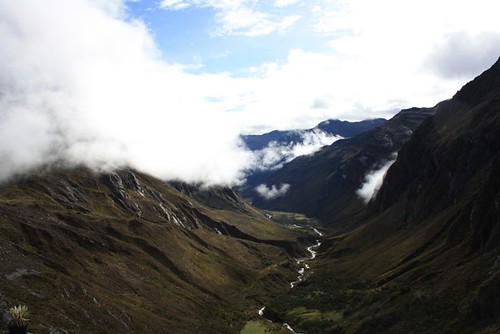
By morning I had made up my mind I was going to just turn around and march a nine hour slog back to the cabañas and give up on this hiking lark. But when I got out the tent the mirror flat lake reflected the surrounding mountains. The mist had risen, not completely, but enough to encourage me. I packed and set off. Even so, I wasn't keen on too many more cold nights in my clapped out sleeping bag. I put in a 10 hour march, rolling together two of the planned days.
IMG_2104
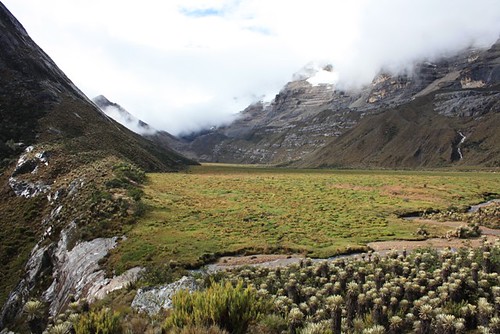
It turned out to be quite a nice day, and by lunchtime the mist had risen quite a bit. I crossed Valle de Cojines a swampy place with rows and rows of triffids. I didn't bother to pick a careful route through the marshy ground. My feet were wet anyway so I just stomped through spashing mud. I had a quick bowl of cold oats for lunch, an insurrance measure against rain. Rain that began shortly after I put the pan back in my sack and started on the next day, if you see what I mean.
IMG_2100
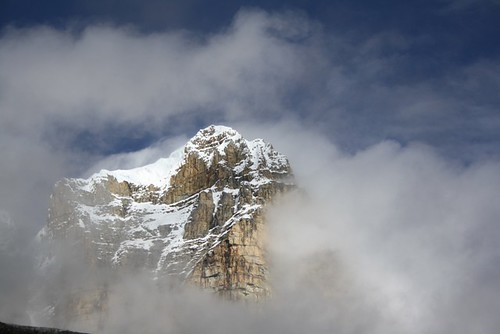
Now I was back to mist and rain and after 4 hours I reached Laguna de la Plaza. It looked like a sea, the other side disappearing into mist. The map said an hour walk to the campsite. It was 2:30pm so, although I was cream-crackered, I assumed I would have time to walk the further 3 hours to the nearest Refuggio. Ha.
IMG_2155
The walk round the edge of the lake was more like a scramble on a series of wet terraces which sloped a hundred metres above the lake, with a film of water running over them. I slipped up several times and decided that going slow was the best course of action. I'd been walking nine hours and hadn't slept for nearly sixty. There was no trail and the cairns were far enough apart that you couldn't see the next one in the mist. My photocopied sketch map was next to useless.

And then came the reward.

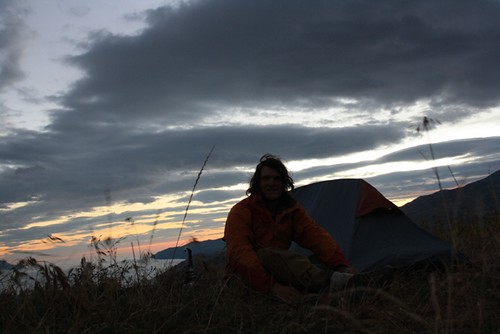
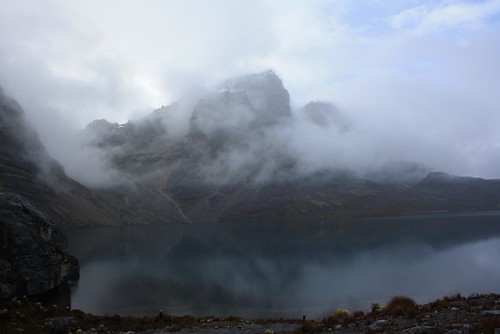
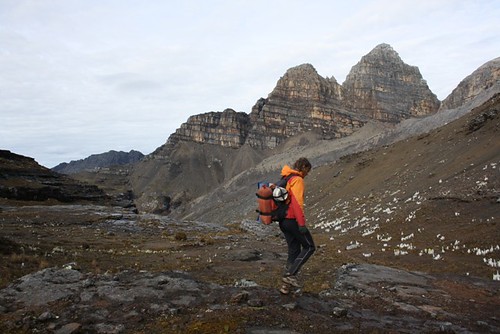
The skies cleared. The mist rose. The rain stopped and the view opened up. Laguna de la Plaza was revealed in all its glory. Unreal. Snow capped mountains loomed over the lake. I stuck up the tent and walked around snapping off hundreds of photos. Fantastic. (it would be another night of shivering but who cares, eh?)
IMG_2173

This post relates to my bike trip in South America in 2010.
I now offer guided walks and walking holidays in the UK in Northumberland, the Pennines, the Lake District, Scotland and further afield.

I'm always keen for outdoor adventures to help people learn the skills to explore! My particular focus is mountain skills such as navigating with a map and compass and wild camping for expeditions.

How to Open a Coconut


I'm sure some of you are sat at a desk, as autumn sets in, and that nagging thought is bothering you again...How do I get my hands on a tasty snack and refreshing drink if I happen to be lazing on a Caribbean beach? Well fear not, for here is How.

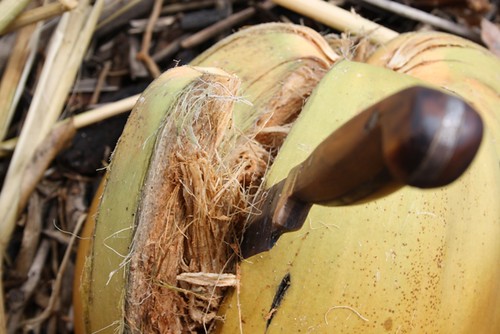
Firstly, you need a machete. And if you don't have one a hand axe. Failing these a knife of some kind. A heftyish fixed blade sort of knife or at the very least locking one. I saw a dude open a coconut with a Swiss Army Knife. He succeeded... but there was blood.

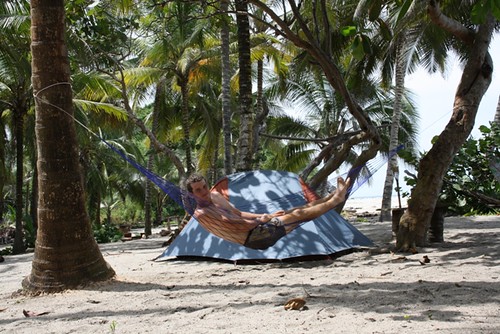
Next, you need to find a coconut. Look under coconut palms. But beware these things fall down without much warning and can kill (also worth bearing in mind when putting up your hammock). Look for greenish ones of a fair size. Avoid old rotten looking ones.
IMG_1686
Step One: Remove the husk. Make three lengthwise cuts in the husk on the flat parts. Then, cut out a smaller segment. This should give you a hand hold to pull of the first third of husk. The other two follow quite easily. The fiberous stuff that makes up the husk is quite easy to cut through but it is grabby so watch out.

Step Two: Drink the milk. Clean up the coco and drill a hole with the point of your knife through one of the black "eyes". Drink up.

Step Three: Crack shell. Twat the coconut against a log or rock until it cracks. Don't obliterate the thing, just make a crack. This can be levered wider with your knife to prise open the coco into several peices.

Step Four: Get the meat out. Use a small sharp knife to score the meat and cut it out. Put in your mouth. Eat.
IMG_1680

Cali to Cartagena: ¡Bienvenidos Caribe!

"Mi interés fundamental es pintar una naranja más naranja" - Ferdinando Botero

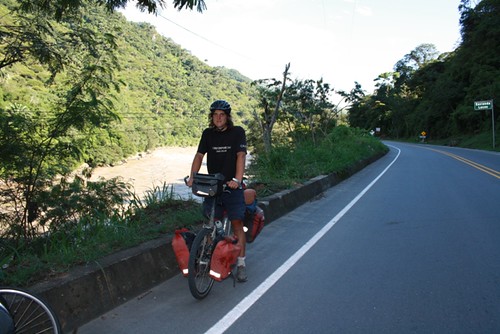
Cycling through Colombia is a joy. The scenery is beautiful. The people are the most open, friendly and generous of my trip. Especially as you travel north. Also the girls get slimmer and prettier, the weather gets warmer and even the traffic seems to ease off. Most days someone will offer me some fruit, beer, cake, or share their lunch with me. Many cyclists or motorbikers will slow down and accompany me for a chat.
IMG_1463
I camped at the Casa de Ciclistas in Cali and Hernan, who is a great guy, showed me a map of Colombia that had elevation profiles. I copied these out into my note book and it has been fun to watch the last few hills roll by. I tried to leave the large, long and complex city. Navigating out of a South American city is no easy task. Firstly, there are little or no road signs. If there are signs they are not necessarily acurate. Then, there are road works, often with a single diversion sign. It seems to say: turn right into the barrio and fend for yourself.
IMG_1465
But back on the open road things are simple again and the PanAm winds up and down, loosely following the course of the Rio Cauca. I swerved the Pereira and Manizales conglomoration and stopped in Chinchina which is in the heartland of coffee production. This is the sort of place that comes alive at night. Street vendors selling arepas con queso (a fried maize bread, stuffed with melted cheese, and dribbled in honey), girls gossiping on benches smoking cigarettes and men laughing their way through cans of Poker beer in cafes.
Medellín nocturna
Before long I reached Medellin. Another stretched out city. Tower blocks, built on a hillside, continue for mile after mile. I took a rest day and visited an art gallery which has a lot of stuff by Botero. He makes paintings and statues of thick people (but not fat because it doesn't hang - just looked it up and the arty term is "exaggerated proportional deformation"). I think they're great fun. His pictures are a bit of a game too. It takes a while to spot some of the things he does. The security guard told me that doors and windows in his pictures are always open. You notice there are lots of horses often with humourous expressions. There are lots of hands and feet too.

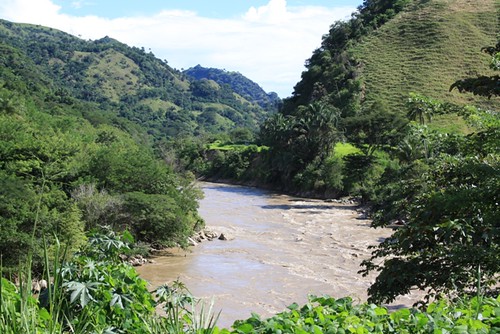
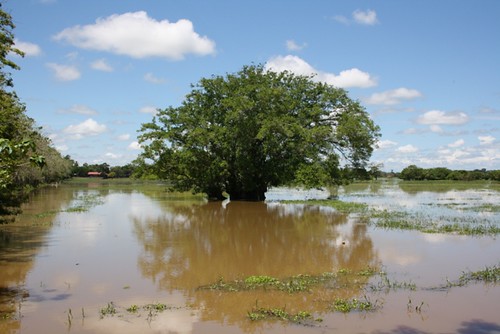
Enough of that, time to hit the last hill. Very cold and raining. I needed waterproofs and thermals again for the first time since Patagonia. Also, I got a bit of a dodgy tummy again so I checked in to a swankyish hospedaje and visited the phamacy. Then down down down. The Cauca was huge when I rejoined it and full of brown mud. It whips along at a fair old pace too. The coconut palm lined valley is full of people living in shoddy shacks and eating fruit whilst lazing in hammocks.
IMG_1459
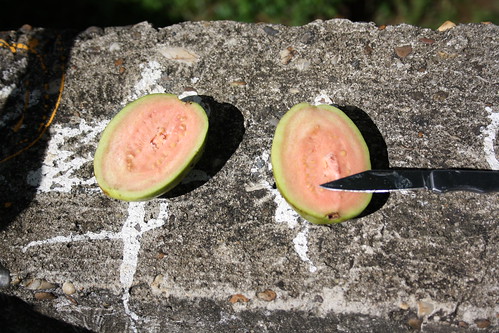
The fruits are fantastic and juices too. Zapote, Lulo and Cheremoya are some of the best. Once, when I was leaning against a tree reading my book and munching some bread, an old man walking past threw me a fruit. I have no idea what it was or what it is called. It was green outside, pink inside, not sweet but very flavourful and delicious.
Colombia 002

It is very common to see people walking, or cycling about, even quite far from towns. Often they have a machete sheathed on a belt with colourful leathery tassles. Sometimes you see 8 year old children hacking away at stuff with a machete taller than them. There is also a distictive straw hat here, sort of like a cowboy hat but with black and white weaving. It's pretty neat.
IMG_1484
Colombia 008
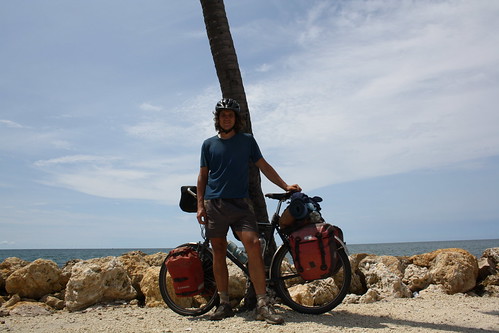
From Caucasia the road takes you away from the river and through mainly flat and hot countryside. Then I reached Cartagena and my first view of the Caribbean sea!
Colombia 017

Vilcabamba to Baños:

For a few days in Vilcabamba a lovely retired couple put me up on their farm. In exchange I picked coffee for a few hours in the mornings, and did a bit of painting in a flat they are renting out. Then I loaded up the trusty steed and headed for the Panamerican. It rained most of the way to Loja and from there most of the way to Cuenca.
IMG_1174
IMG_1179
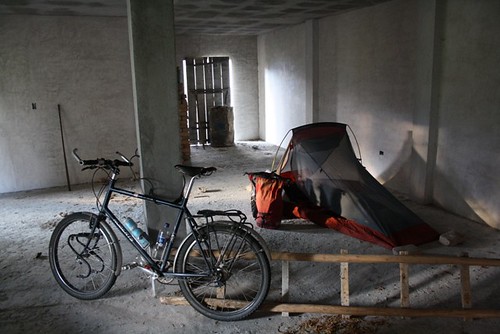
Weird that it is so cold so close to the equator. But then I was still cycling along above 2000m. Camping in an unfinished house that a shop owner said I could use kept me out of a biting cold wind. The next night I found a Wild West themed restaurant out in the middle of nowhere and the owner let me camp outside. There must have been something about the clay hereabouts as I saw many little brick factories as I climbed up, up, up.

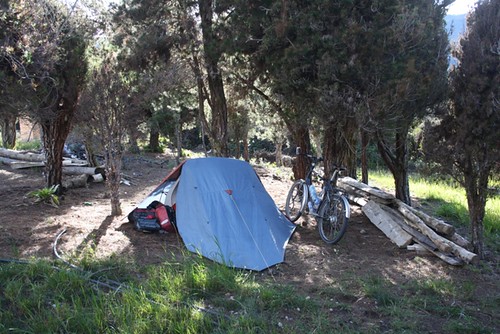
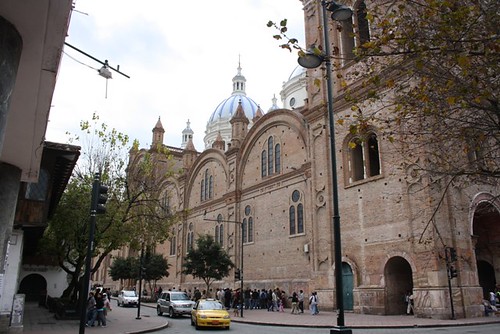
Cuenca is a delightful old colonial city and so it is also quite expensive. I got my fill of architecture and slept in a bit too much comfort. Then I headed on towards Riobamba. Nice campspot in a corn feild with a beautiful sunset. Met a huge gaggle of cyclists heading south. Fully supported. There website is bike-dreams.com. Check out the price 8400 euros for 129 days. Phewy!
IMG_1183
IMG_1202
IMG_1206
Also met Ewan McGreggor. Or at least someone who looked a bit like him...
IMG_1209
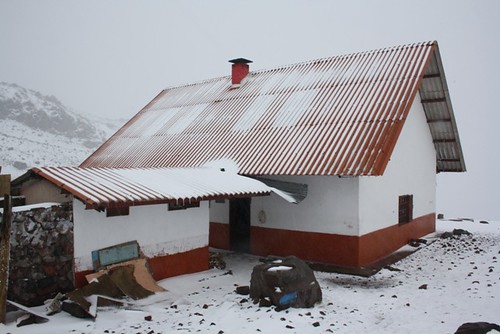
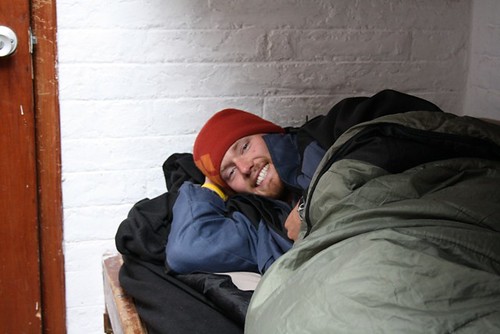
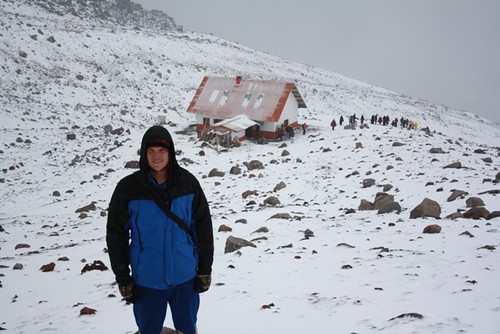
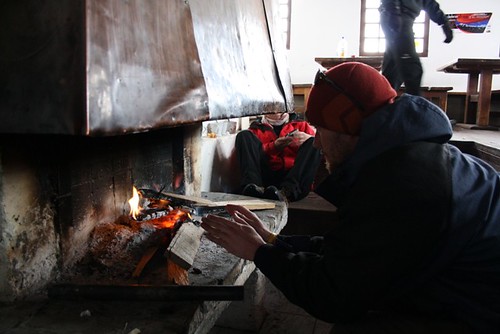
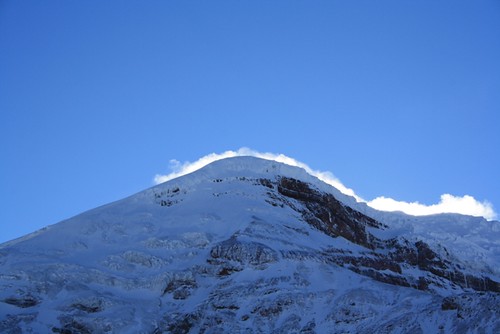
Got to Riobamba and found my couchsurfing host, Wladimir who had also fixed me up with a climbing partner and guide to have a crack at Chimborazo. Dean and I got a bus to the national park and hiked up to the refuge at 5000m where we spent 2 days eating, playing cards, warming ourselves by the fire, eating, drinking tea, eating and waiting for Ediverto, our guide, to show up. Occassionally we went and lay down pretending to sleep. The weather outside shook the refuge and we saw nothing of the mountian we intended to climb. All this time we saw groups arrive and looking at the conditions, turn back. There was much discussion about an accident earlier in the week in which a climber was injured by a rock fall/avalanche. Very few even left the refuge. Also, a slightly creepy Russian bloke, called Igor, started probing us with questions. It was soon clear that he intended to follow us when we set off. Bit cheeky seeing as we'd paid for a guide and he hadn't.
IMG_1212
IMG_1214
IMG_1222
IMG_1226
IMG_1249

Ediverto showed up and at 11pm we set off. The sky was clear now but it was very windy. The fresh snow, warmed up by that blanket of cloud, was described by Ediverto as suave (soft or gentle) and later on loco (crazy). I began to get the impression this wasn't going to happen. As we headed up we saw that Igor was following us. Then, as we stopped to have another good look at the snow, he overtook. At the base of "the corridor", the site of the accident, we couldn't see Igor above. Ediverto said he was very worried about him as it was a very dangerous part to be on your own. He decided that the risk of rockfall in this spot was too high especially with the strong wind. And higher up the chance of avalanche was also strong because of the poor snow conditions. He explained all this to us and we had to accept his decision. As we walked down he was very worried about Igor. Soon we saw his head torch following us down.
Back in Riobamba I got a full day's sleep and then set off again. Due to my lousy sense of direction, and Ecuador's lack of sign-posts, I ended up going up a very long hill in not quite the right dirrection. I ran out of water and had to top up from a village tap, bit risky. Then got some dry bread to eat for lunch. In the end I managed to work out roughly were I was and the bonus of all that climbing was I got to freewheel for thirty odd kilometres down to Baños.

Next, I head for the jungle town: Puyo...

Ecological Farming on a Ecuadorian Mountainside

"We are stardust. We are golden. And we've got to get ourselves back to the garden."
-Woodstock by Joni Mitchell
IMG_1108
IMG_1051
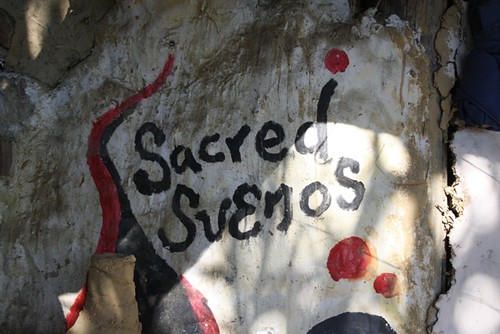
My friends Ryan and Jenn travelled through South America a few years ago and visited an ecological farm called Sacred Sueños. Jenn wrote an article about Permaculture farming in a Canadian magazine. Ryan recommended the place to me so, with my bike safely locked up in a garden shed at the base of the mountain, I hiked the two hours up the mountain to the farm.
IMG_1048
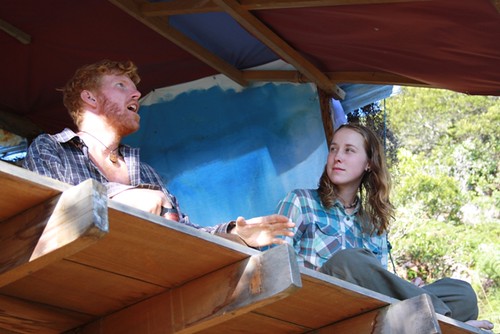
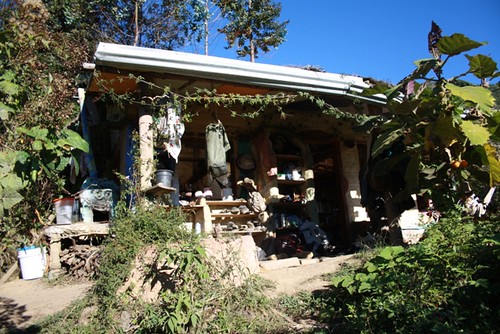
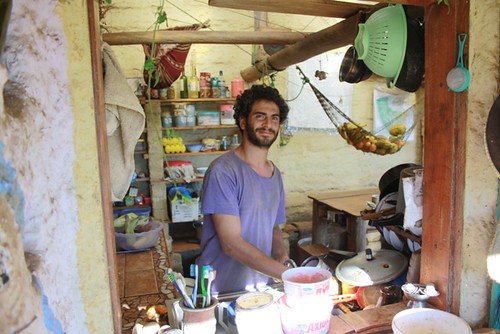
Yves Zehnder bought the land here 7 years ago. He is a ginger haired Canadian driven here by his frustration with modern society. He put up his tent and set about trasforming the 10 hectares of land. The soil was very low quality, years of slash-and-burn farming had left only bracken fern. He built himself an adobe brick house which now acts as the kitchen and communal area for the volunteers like me who come to live and work here for a few weeks.

In his first few years the local Ecuadorians thought this young gringo who had bought land would make an excellent husband for their daughters. They would bring their loveliest seventeen-year-olds which he would politely decline. Rumours spread that he was gay. One day, after a hard day building the kitchen, Yves decided it would be fun to strip naked, jump in the mud pit, used to make the earth bricks, and splash around and make monkey noises. Perhaps too much time alone on a mountainside was to blame. Unbeknownst to him a local farmer was on his way with another angelic young daughter. They got the shock of their lives and Yves pulled on his jeans. His muddy legs stuck to the inside.

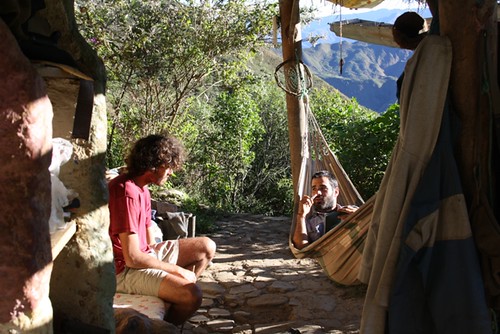
Seven years on and things are in a little more order. Yves and his partner Jenn are live at the farm and a stream of volunteers come up to help out for a few weeks. The farm has been designed along permaculture principles and aims to become self-sufficient and sustainable. All sorts of trees are in the ground such as Hazelnuts, Avocados and Peach, but it will be several years still till they reach maturity. The garden is fairly fruitful especially with salad, beans and grenadilla. I spent 3 weeks digging trenches, building trails and steps, building new raised beds and helping to build a new water tank. Here is a summary of the kind of thing they are doing.
IMG_1140
Improving soil
Chicken Tractor (Chickens are kept in a movable coop. Their droppings help to improve soil fertility)
Humanure (The result of the composting toilet. One of the best fertilizers on the farm)
Compost (Layers of dry grass, donkey shit, kitchen scrap, ash, fresh green matter and more donkey shit. Turned infrequently in the hope that nutrients don't escape to the air)
Compost tea (Fish beans and comfrey mixed in water or urine. Water soluble nutrients are more likely to form in a liquid, bit smelly though)
Planting native species
Planting dynamic accumulators such as nitrogen fixers.
Heavy prunning
Protecting with mulch, contour ditches, bunds and tree roots (to stop all that good soil being washed down the mountian).
IMG_1134
Building
Cob - A building technique using clay, sand and earth bonded together with straw fibres tradditionaly but recycled plastic strips can be used. The dormitory where I stayed had a "Bodega" built from cob with a wooden structure above.
Adobe bricks - Tradditional building material in South America. Bricks are made from clay, sand, earth and water and dried in the sun. The communal kitchen is built from adobe.
Earthbags - Another technique using earth, this time in polypropelene bags (3 cents each) which are filled and rammed in place. Sucessive layers are tied with string and help in place with barbed wire. The water tanks are built in this way.
Natural timbers and rocks.
Cement, Tin roofs, transparent plastic sheeting and lumber from down the hill
IMG_1075IMG_1077IMG_1113
Animals
Donkeys and horse (used for logistics, i.e. for carrying food/gas/people/building materials up the hill and thier shit is collected to go in the compost)
Goats (Yves runs a small goat cheese business so he can afford to pay the weekly $25 for food)
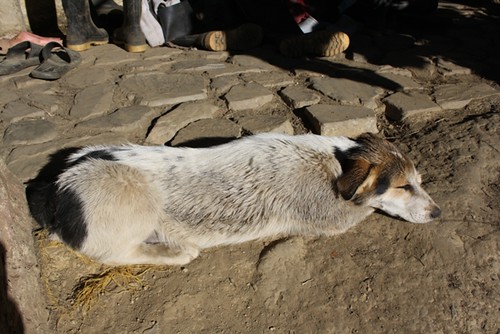
Dogs (companionship and security)
Cats (companionship and pest control)
Chickens (eggs and soil fertility)
Bees (polonation, in the future hopefully honey, wax and propolis)
IMG_1063IMG_1085IMG_1106IMG_1116
Human Services
Toilet (Composting toilet for poo. Essentially just a glorified bucket. Sited with great views of the mountian. A scoop of sawdust (which they get for free) goes over the shit. The bucket is emptied into a pile where it decomposes into a firtile soil called Humanure. Wee on trees, or collected for compost tea).
Shower (A lovely outside heated shower with a coil of black pipe that heats up in the sun)
Laundry (bucket and washboard. There is also another spiral of black pipe to heat up the washing water.)
Cooking (gas bottles from down the hill)
Food (some fruit and veg from the garden plus $25 a week each for food from the market in Vilcabamaba)
Light (candles and headlamps)
Computer (solar charged)
Batteries (charged down the hill)
Cell phone (solar charged)
IMG_1052IMG_1054
Stimulus
Music (mp3 players and a solar powered amp and speakers)
Musical instruments
Books (well stocked library)
Animals
Radio
Games box
Firepit
Conversation and stories

Recycling
Food scraps and peels is used for compost or animal feed.
Paper is burned.
Plastic is reused where possible. Milk and oil containers are turned into planters. Other plastic bags are either reused or cut into strips to be used in cob building.
Only the most scanky of stuff, and non-rechargable batteries, go down the hill.
IMG_1037IMG_1036IMG_1035
Water
Water tanks
Dammed creeks
Drainage ditches and contour bunds
Ponds
Gutters to collect rain off roofs which is then diverted to plants.
Mulch
Micro catchment (when a new tree is planted, ditches are dug to provide proper drainage)
Greywater system (waste water from washing up, showering, laundry etc is used for irrigation)
Dry toilet (so no water lost in flushing)
IMG_1155
IMG_1153IMG_1147IMG_1143
Sucessful Plants
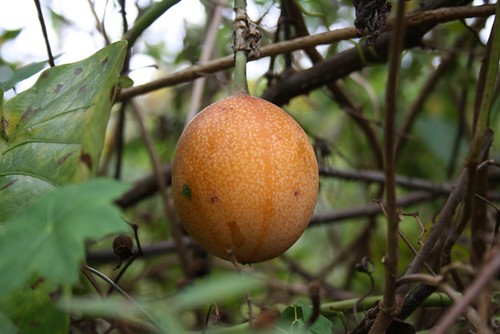
Naranjilla (for juice)
Granadilla
Tomate de arbol (for juice)
Scarlet runner beans (causes lots of farting)
Lettuce and salads
Herbs (oragano, thyme, basil, rosemary, lemon verbatim, mint)
Aloe
Raspberries
Blackberries
White carrots
Tomatoes in greenhouse and outdoors
Uvillas
Capeberry
Kale
Zuccini
Tarro root
Laconi
Zambo (a type of squash)

Gardening Methods
Grow from seed
Biodiversity to combat pests and disease
Hand watering
Free labour from volunteers
Pollycropping
Plant with moon

Future Ambitions
Self-sufficiency
A small permanent community
Reforestation
Edible forest garden (trees are all too small still)
Juice bar (for sale to passing horse riders and hikers)
Herbal medicine for use and sale
Preserves for use and sale
Honey and bees wax
Social Projects (Yves set aside the most firtile part of the the land he owns for a future project. He invisages that a women's refuge, a rehab clinic or something like that might be built and run by future residents.)
Internships (They hope to get people willing to stay for several months (rather than a few weeks) so they can take on more responsibility)
Free festivals (primarily just to get more shit for humanure)
Free permaculture design courses for Ecuadorians subsidised by pricey courses for westerners.
IMG_1154
Challenges and Setbacks
Doing everything manually (screws up your back and takes longer but is free (especially with help of volunteers))
Poor soil
Unpredictable climate
Runoff
Mosquitos
Cultural separation (Jenn is having a hard time learning Spanish even after living here for 2 years as the volunteers mostly speak English)
Isolation
Social dynamics (During my stay there were a few moments of friction between Jenn and other volunteers. I think she would freely admit that at times she is not the easiest person to get along with. At one stage, when I was amidst a frustrating plumming dilema (I put the faucet on backwards) this included me, but when she made us both a vodka and freshly squeezed orange juice our differences where set aside.)
Transitory nature of community (It is hard for Jenn and Yves to invest much effort into getting to know people who will be gone in a few weeks.)
Exposure to wind, rain, sun.
Limited personal funds (Jen has a dwindling savings account and Yves is, more or less, broke).
Distance from medical assistance
Mistakes
No refrigeration
Animals (unpredictable)
IMG_1159
Best things about living here
Healthy diet
Plenty of exersize
Beautiful setting
Meeting lots of interesting people
Closer connection to food/land/environment
Not wasteful
Learning/experimenting
Sunsets
Donations from people inspired by the project. Land, books, seeds, tools, clothes, animals.
Tranquility
No city bullshit, usually
Waterfall
No boss or 9 to 5. (7 to 7 instead!)
Stars
Animals
IMG_1072